City guides
City guides (435)
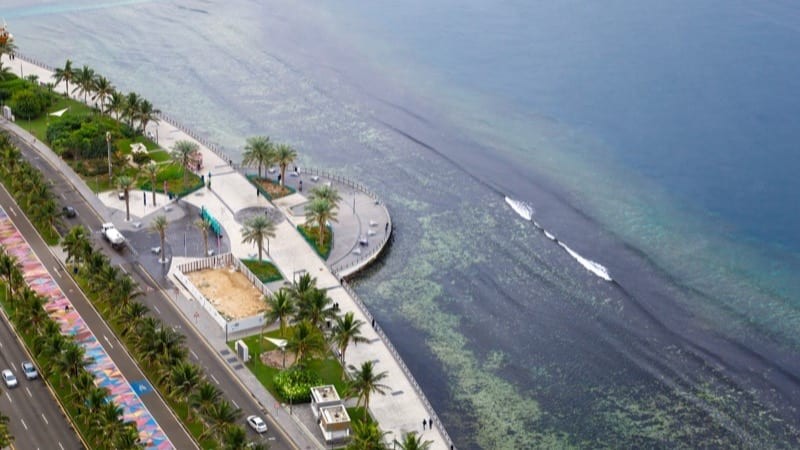

Jeddah
Saudi Arabia
Jeddah is Saudi Arabia's commercial capital, second-largest city, and the historic gateway to the Holy Cities of Makkah and Madinah. The city sits on the Red Sea, has long been Saudi Arabia's most cosmopolitan and merchant-driven urban centre, and serves as the launchpad for the Red Sea Project, NEOM (north), and the broader western Saudi tourism opening. Residential prices in prime districts (Al Shati, Al Hamra, Al Rawdah, Al Zahra) run SAR 4,500-9,500 per square metre, with gross yields of 6.0-7.5% -- above Riyadh because Jeddah is NOT subject to the September 2025 rent freeze. This makes Jeddah the more attractive near-term yield play within Saudi Arabia for foreign buyers. For international buyers (post-2025 foreign ownership law), Jeddah offers Red Sea coastal positioning, the Hajj/Umrah economy (10+ million pilgrims annually), and unconstrained rental income growth. The catch: regulatory pace lags Riyadh, designated foreign-ownership zones may roll out later, and infrastructure quality is patchier than the capital.
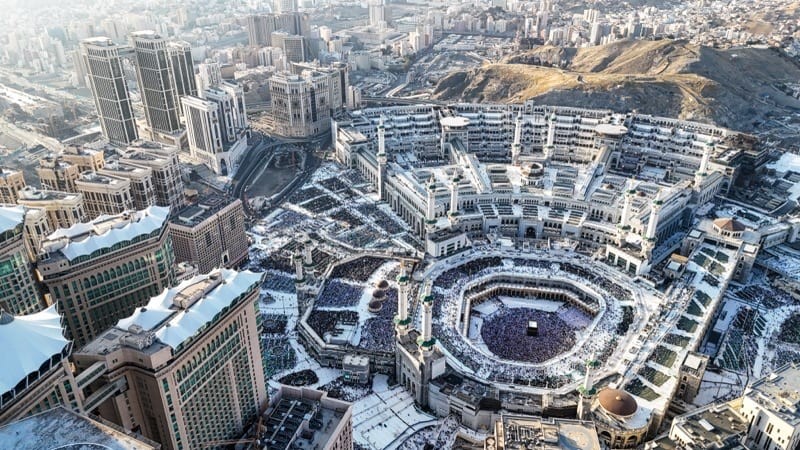
Mecca City Guide
Saudi Arabia
Mecca, capital of Makkah Province and Islam's holiest city, is home to the Masjid al-Haram and the Kaaba, drawing well over ten million Hajj and Umrah pilgrims a year and underpinning one of the world's most concentrated hospitality real-estate markets. For foreign investors this is the most restricted market in Saudi Arabia: the new national foreign-ownership law that took effect in January 2026 explicitly carves out Mecca and Medina as special high-restriction zones, so non-Saudis cannot freely buy property here. The realistic route is indirect, a January 2025 reform now lets foreign investors take stakes in listed companies that own real estate in the two Holy Cities, alongside long leasehold structures (up to 99 years) typically tied to pilgrim-accommodation and hotel schemes. Mecca residential prices actually softened, falling about 2.1% in Q1 2025 even as Riyadh surged, reflecting an oversupplied pilgrim-housing segment rather than scarcity. The investment case is hotel and serviced-apartment leasehold yield driven by year-round religious tourism, not freehold capital gains.
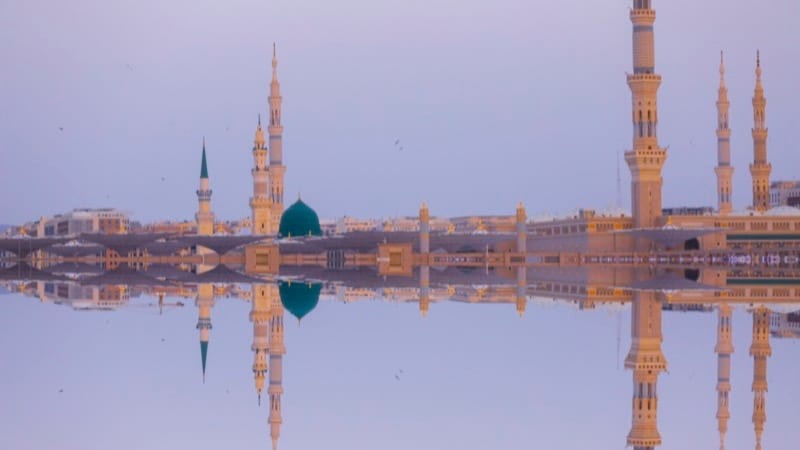
Medina City Guide
Saudi Arabia
Medina, capital of Al Madinah Province and the second-holiest city in Islam, is built around Al-Masjid an-Nabawi (the Prophet's Mosque) and absorbs the bulk of Hajj and Umrah pilgrims alongside Mecca, making pilgrim accommodation its dominant real-estate sector. Like Mecca, Medina is a special high-restriction zone under Saudi Arabia's foreign-ownership law that took effect in January 2026, so foreigners cannot freely purchase freehold; non-Muslims are barred from owning inside the city's sacred boundaries, and non-Saudi Muslims face special conditions set out in the executive regulations. Since January 2025 foreign investors may instead take equity stakes in listed companies that own property in the Holy Cities, and long leasehold (up to 99 years) is the practical vehicle for hotel and serviced-apartment exposure. The wider Saudi residential index slipped about 2.2% over the year to Q4 2025, and Medina shares the oversupplied pilgrim-housing dynamic, so the realistic thesis is occupancy-led hospitality income near the Central Area rather than freehold capital growth.
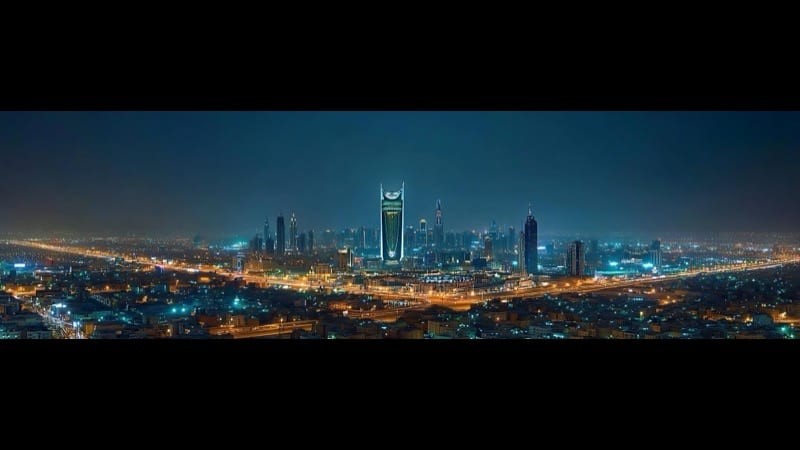
Riyadh
Saudi Arabia
Riyadh is Saudi Arabia's capital, largest city, and the epicentre of Vision 2030 transformation. The city has grown from 3 million residents in 2000 to ~8 million today and is projected to reach 15-20 million by 2030 as the Crown Prince's Vision 2030 plan relocates regional HQs, expands government employment, and drives population in-migration. Residential prices in upscale districts (Al Olaya, Al Malqa, Al Narjis, Diplomatic Quarter, Hittin) command SAR 6,000-12,000 per square metre, with gross yields of 5.8-7.2%. The September 2025 5-year rent freeze (effective through September 2030, within the city's urban boundary) is the defining market feature -- it caps rental income growth at zero in real terms for new investors, a material negative driver. Capital values continue to appreciate, however, on supply tightness and Vision 2030 demand. For international buyers (post the 2025 foreign ownership law, effective January 2026), Riyadh offers first-mover access to one of the world's most ambitious capital city transformations, USD-pegged currency, and zero personal income tax. The catch: foreign ownership is only allowed in designated zones, and the rent freeze caps near-term rental yield growth.

Cape Town City Guide
South Africa
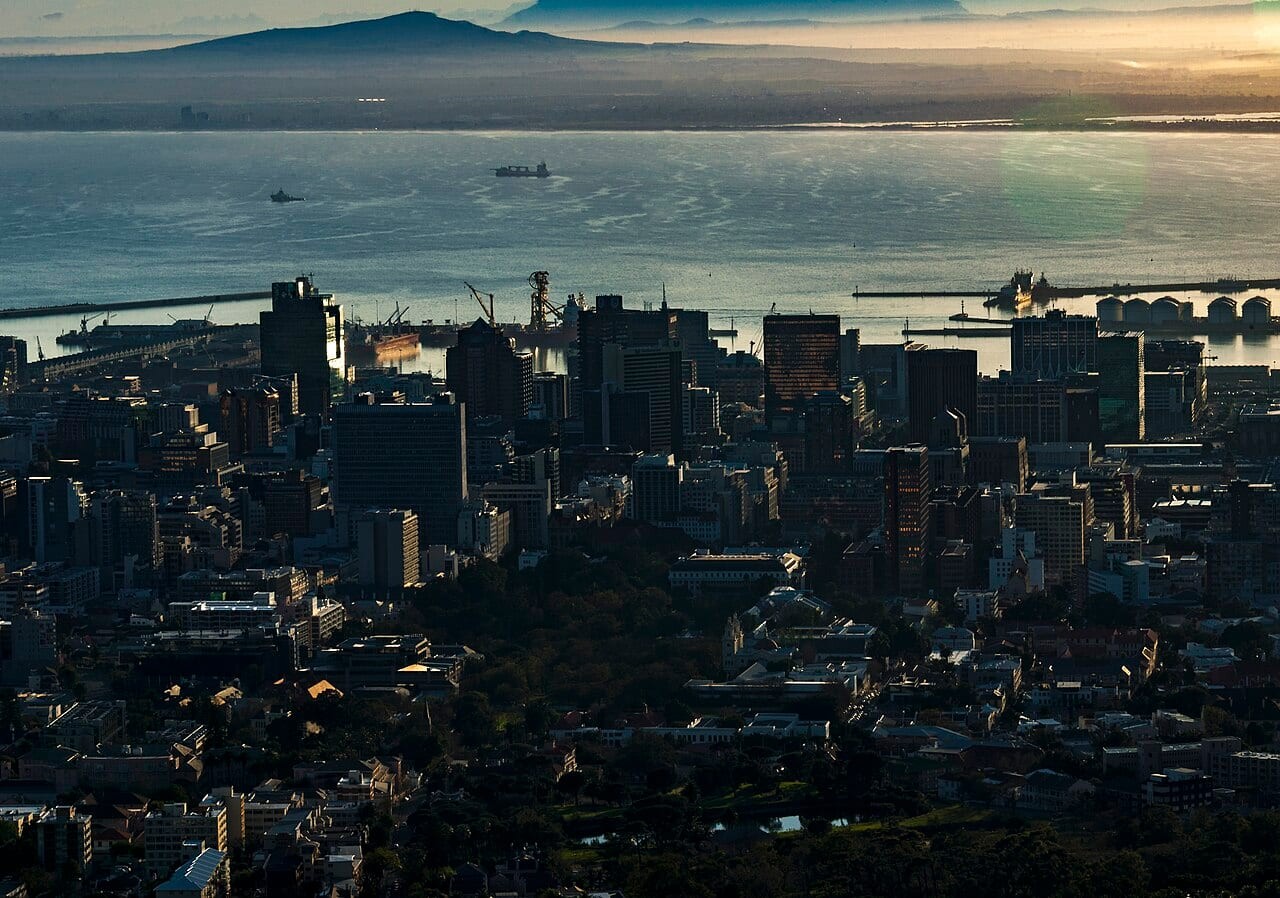
Cape Town is South Africa's second-largest city and legislative capital, wrapped around the City Bowl beneath Table Mountain and fringed by the Atlantic Seaboard's beaches (Clifton, Camps Bay, Sea Point). It is consistently the country's strongest residential market: Western Cape house prices rose roughly 8–10% in the year to 2025 versus a national average nearer 4–5%. The dominant demand driver is 'semigration', affluent South Africans relocating from Gauteng and KwaZulu-Natal to the Western Cape for lifestyle, governance and safety, layered on strong international demand and an outsized tourism economy. The city is also South Africa's leading technology hub ('Silicon Cape', 450+ tech firms incl. Amazon's African operations), underpinning professional rental demand, and one of the world's largest Airbnb markets (the V&A Waterfront alone draws ~24m visitors a year). National load-shedding, severe through 2023, had largely ceased by 2025 (200+ blackout-free days), though most premium properties still run backup solar/inverters. For foreign investors, ownership is open, non-residents buy freely; the main constraint is exchange-control financing (typically max ~50% local mortgage, the balance brought in from offshore). There is NO property-based golden visa, buying grants no residency. The rand is volatile, which lowers euro entry costs but adds currency risk to returns.
Durban City Guide
South Africa
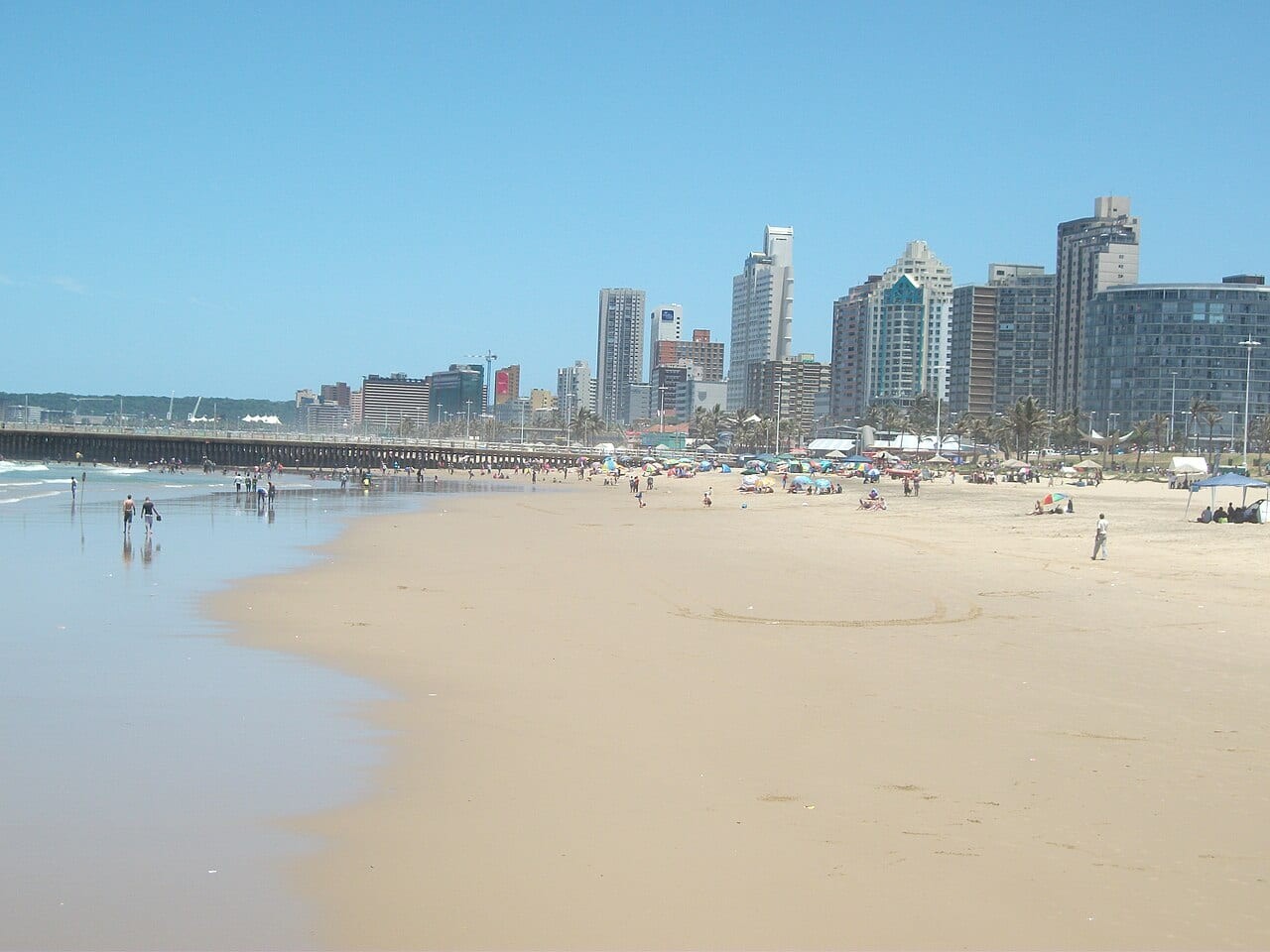
Durban is South Africa's third-largest city and the warm-water gateway of the Indian Ocean coast, wrapped around the busiest port in Africa. Its signature is the Golden Mile, a long beachfront promenade of surf beaches and the uShaka Marine World complex, set against a humid, year-round-swimming climate that makes KwaZulu-Natal the country's domestic-holiday capital. At roughly half the per-square-metre cost of Cape Town's Atlantic Seaboard, Durban reads as a value-and-yield market rather than a capital-gains market. The investment story of the last decade has been a clear migration of money north of the old centre to the uMhlanga / La Lucia 'New Durban' growth node, anchored by the giant Gateway mall, the uMhlanga Ridge business district and the emerging Sibaya Coastal Precinct, which now functions as the de-facto premium CBD. Domestic 'semigration' from Gauteng to the KZN coast continues to feed demand here and up the N2 toward Ballito. Honesty matters: the boom is geographically uneven. The historic inner city and parts of the beachfront fringe have declined through service strain and the aftermath of the 2021 unrest and 2022 floods, while a multi-billion-rand regeneration (Point Waterfront, Rivertown) is still a work in progress. The reliable returns sit in the northern suburbs and the Berea ridge (Morningside, Musgrave, Glenwood), where strong rental demand and established schools offset slow headline price growth. Foreigners buy freely (non-residents ~50% local finance, exchange control); there is NO property golden visa. Investors come to Durban for income and lifestyle, not the appreciation curve.
Johannesburg City Guide
South Africa
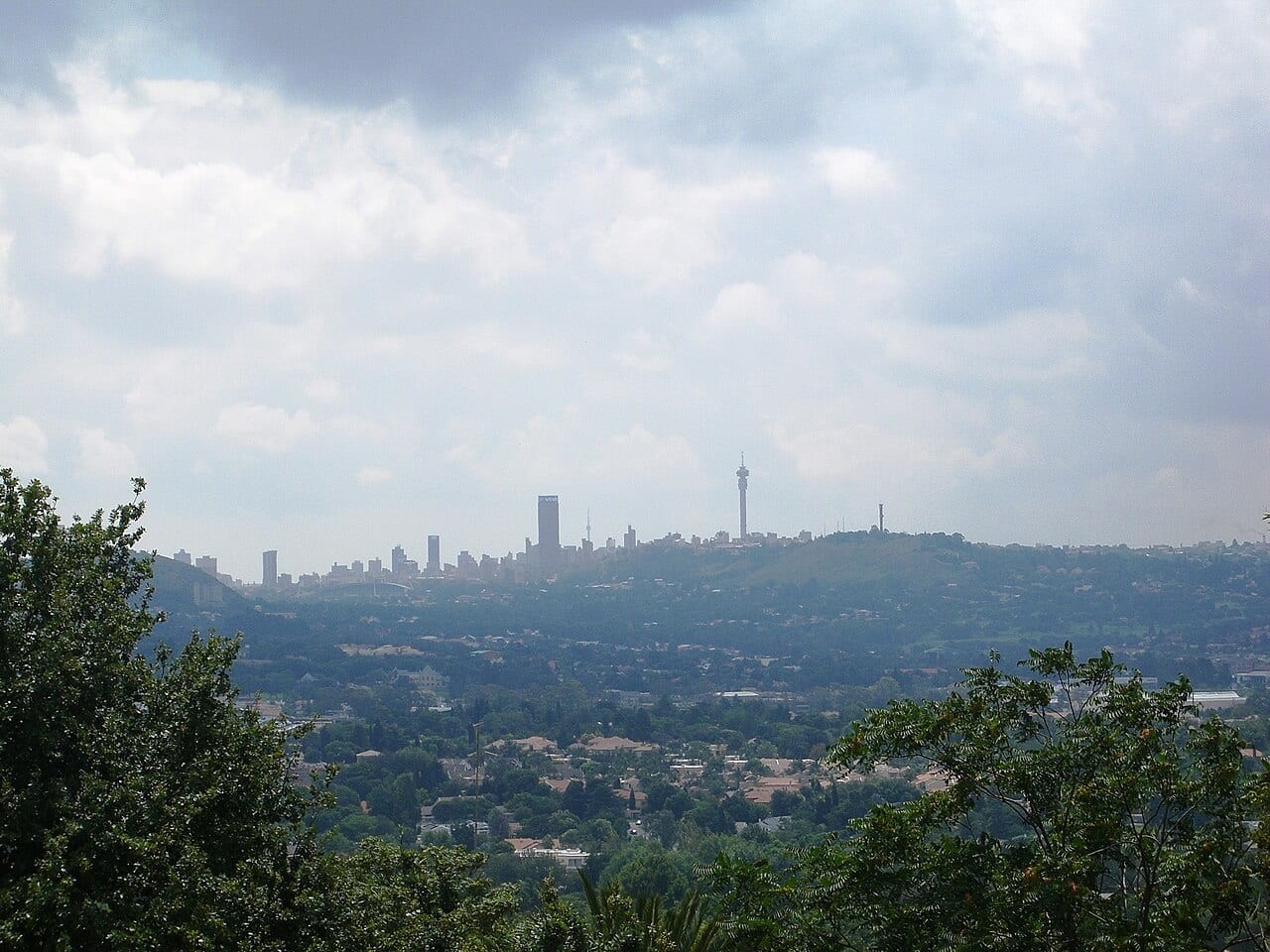
Johannesburg is the economic engine of South Africa and the wider sub-Saharan region, the country's largest city (metro ~6.45m) and seat of the Johannesburg Stock Exchange, Africa's largest bourse. Within it, Sandton functions as the de-facto financial capital, routinely branded the 'richest square mile in Africa'. Everything is priced in the rand (ZAR), a volatile emerging-market currency, the single most important variable for a euro investor, since local price growth can be erased or amplified by ZAR moves. Joburg's defining feature is its gated-estate and security-complex culture. Demand concentrates in the affluent northern suburbs (Sandton, Bryanston, Fourways, Rosebank, Houghton) where 24-hour access control, electric fencing and private patrols are standard and priced into the asset, a response to a genuinely high city-wide crime environment, so security is a real ongoing cost, not a marketing flourish. Two honest headwinds: 'semigration' out of Gauteng to the Western Cape has pushed Cape Town's price growth (~9–10% YoY) far ahead of Gauteng's (~3% YoY), so Joburg has lagged Cape Town on capital growth for years; and load-shedding, severe in 2022–24, had largely abated by early 2026 (300+ blackout-free days). The investment thesis is the mirror image of Cape Town's: lower capital growth, but materially higher rental yields and far cheaper entry prices. There is NO property golden visa, buying confers no residency.
Algorfa City Guide
Spain
Algorfa is a peaceful inland Vega Baja citrus-farming village on the right bank of the Río Segura, built up around the La Finca Golf & Spa Resort and popular with Northern-European relocators. Its 18-hole La Finca golf course and five-star spa hotel, the Castillo de Montemar urbanisation (one of the village's three resort areas with Lo Crispín and Montebello), the neo-Gothic village church and the La Pedrera recreation zone define a small municipality of about 3,800, roughly ten minutes inland from the coast. For buyers, it is a value golf-and-villa market: current platform listings run roughly €159,000–€840,000 (La Finca resort villas at the top), with an indicative gross rental yield around 5.2%. Alicante-Elche Airport is about 35 minutes by road, with the beaches of Guardamar and Torrevieja ~10–20 minutes away. The buyer base is Northern-European relocators and golf-and-holiday-home buyers. See the Spain Investor Guide.
Alicante City Guide
Spain
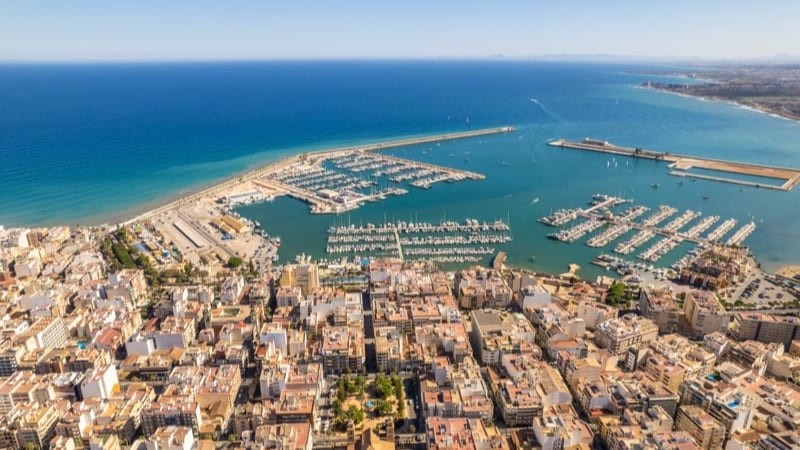
Alicante, the gateway city of the Costa Blanca, is the most international property market in Spain. Foreign buyers account for close to half of all transactions in the province, drawn by 300-plus days of sunshine a year, a busy international airport and direct beach access. Prices have climbed sharply: the city average reached roughly 2,435-2,508 euros per square metre by early 2026, a year-on-year rise of around 16%, yet values remain affordable next to Spain's capitals and prime coastal hotspots. Rental yields are competitive at about 5.5% gross for long lets, while short-term holiday rentals in premium seafront areas can return 6-10% per annum given the year-round tourism season. Demand is broad-based (UK, German, Dutch, Scandinavian and Belgian buyers dominate the international segment), and emerging neighbourhoods such as San Blas-PAU and Villafranqueza posted growth above 22% in 2025. Nearby Costa Blanca markets like Torrevieja, La Mata and Punta Prima offer higher-yield, lower-priced alternatives. As a Eurozone destination Alicante provides currency and legal stability, but investors must weigh genuine risks: rapid price appreciation raises overheating concerns, Spain ended its Golden Visa in 2025 (removing the residency-by-purchase route), and several municipalities are tightening short-term-rental licensing.
Altea City Guide
Spain
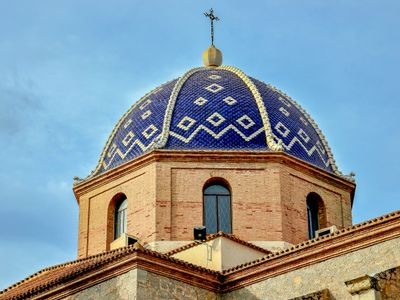
Altea is the Costa Blanca's bohemian-chic address — a whitewashed artists' hill town crowned by the blue-domed church of Nuestra Señora del Consuelo, with labyrinthine old-town streets, a Russian Orthodox church, and the upscale Altea Hills and Puerto Luis Campomanes marina along the coast below. Quieter and more upmarket than neighbouring Benidorm, it has a population of about 24,600. For buyers, this is a higher-end, villa-weighted market: current platform listings run roughly €495,000–€2,295,000 (Altea Hills sea-view villas at the top), with an indicative gross rental yield around 4.7%. Altea sits on the FGV TRAM Line 1 (Alicante–Benidorm–Dénia) with AP-7/N-332 access and Alicante Airport about an hour away. The buyer base is international lifestyle demand — British, Scandinavian, Dutch and Belgian — drawn to the art-town character and sea-view villas rather than mass resort product. See the Spain Investor Guide.
Barcelona City Guide
Spain
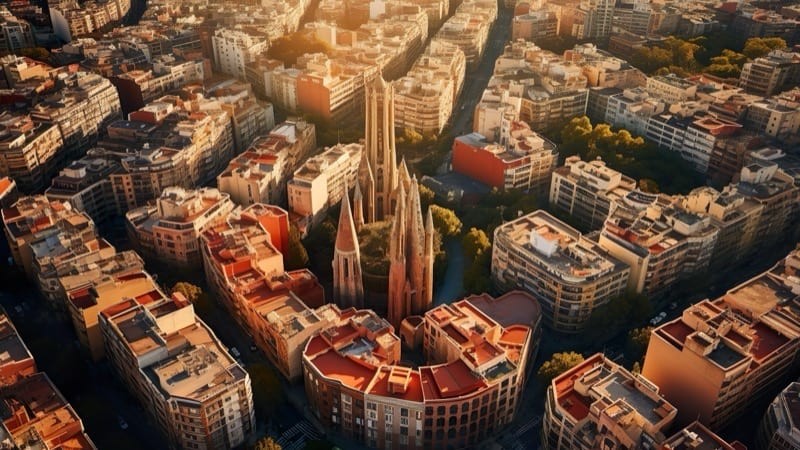
Barcelona, the capital of Catalonia, blends Mediterranean lifestyle, world-class beaches and the unmistakable modernisme of Antoni Gaudi (Sagrada Familia, Park Guell, Casa Batllo) with a fast-growing tech and startup economy anchored in the 22@ innovation district. It is a top global tourism destination and a magnet for international residents - foreign nationals make up around 26% of the city's population. Foreigners can buy property freely with no nationality restrictions, but the investment landscape has shifted sharply. Spain abolished its Golden Visa (residency-by-property-investment): the program closed to new applicants on 3 April 2025. Barcelona is also phasing out short-term tourist-rental apartments - the city will not renew any of its ~10,000 HUT (tourist-use housing) licences when they expire in November 2028, effectively ending legal tourist flats (a phase-out upheld by Spain's Constitutional Court). Separately, in January 2025 the central government proposed a tax of up to 100% on second-hand homes bought by non-EU non-residents; this remains a proposal, not law, and faces significant legal and political obstacles.
Benahavís City Guide
Spain
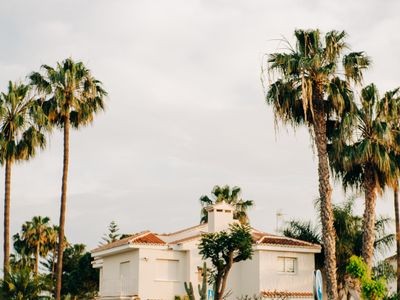
Benahavís is an inland gastronomy-and-golf white village behind Marbella and Estepona — reputedly Spain's most expensive municipality, and home to La Zagaleta, one of Europe's most exclusive gated estates. A village of around 10,000 with more restaurants per capita than almost any Andalusian pueblo (the self-styled "culinary capital of the Costa del Sol"), it is ringed by nine-plus golf courses including Marbella Club Golf Resort, Los Arqueros and El Higueral, with the Guadalmina river gorge for nature. For buyers, this is an ultra-prime market: the municipal average is around €5,600/m² (mid-2025, ~+15% YoY), with apartments €4,500–€6,000/m² and modern villas €6,000–€9,000/m² (ultra-prime beyond €10,000/m²); within La Zagaleta villas average ~€8,365/m² and reach €20–30M+. Over 84% of residential purchases are by foreign nationals — UK-led, then Swedish, Belgian, German and Dutch. Málaga Airport is ~71 km (≈60 min). See the Spain Investor Guide.
Benalmádena City Guide
Spain
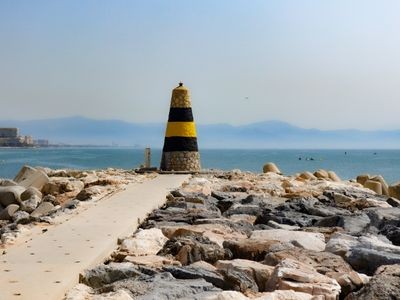
Benalmádena is a three-in-one Costa del Sol town — the whitewashed hilltop Benalmádena Pueblo, the bustling inland hub of Arroyo de la Miel, and the marina-and-beach coast of Benalmádena Costa — and the most attraction-dense family-tourism town of the central coast. Its award-winning Puerto Marina, the Teleférico cable car up 770 m Mount Calamorro, Colomares Castle and Selwo Marina anchor a municipality of about 78,000, with the Cercanías C1 train at Arroyo de la Miel putting Málaga Airport ~20 minutes away. For buyers, the average is around €4,139/m² (apartments ~€4,375/m², houses ~€3,502/m²), with district spread from Arroyo de la Miel (~€3,223/m²) to Parque de la Paloma (~€4,936/m²) and the Puerto Marina area (~€4,687/m²). Gross rental yields run ~4–5.5% long-term (licensed holiday lets higher). The buyer base is heavily international holiday-home and lifestyle demand — British, Scandinavian, Dutch and German — plus a large resident expat base. (Note: the historic Tivoli World theme park has been closed since 2020, with redevelopment projected later this decade.) See the Spain Investor Guide.
Benidorm City Guide
Spain
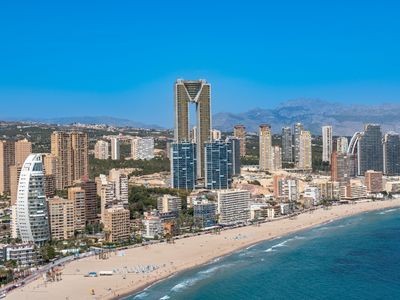
Benidorm is Spain's high-rise beach-resort capital — the "New York of the Mediterranean" — where the Levante and Poniente beaches sit beneath a Manhattan-style skyline anchored by the Intempo tower and the Gran Hotel Bali. Backed by theme parks (Terra Mítica, Aqualandia, Mundomar) and the Balcón del Mediterráneo viewpoint, it is one of Europe's most intensive tourism economies, with a resident population of about 77,300 that multiplies in season. For buyers, Numbeo puts city-centre apartments around €4,613/m² (and ~€2,258/m² outside the centre), with gross rental yields cited at ~4.2% in the centre and ~6.8% outside; current platform listings run roughly €349,000–€1,650,000 with an indicative yield around 5.8%. Benidorm is a hub of the FGV TRAM Metropolitano (toward Alicante and Dénia), with AP-7/N-332 access. The buyer base mixes strong domestic Spanish demand with British, Scandinavian, Dutch and Belgian holiday-let and second-home buyers. See the Spain Investor Guide.
Benitachell City Guide
Spain
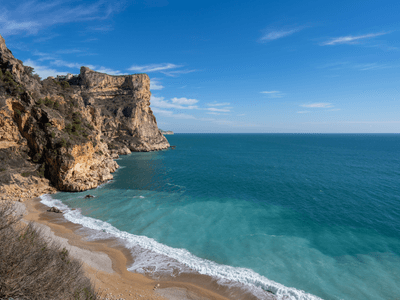
Benitachell (El Poble Nou de Benitatxell) is a tranquil clifftop town between Jávea and Moraira, dominated by the large international Cumbre del Sol urbanisation and one of the Costa Blanca's most dramatic cove-and-cliff coastlines. Around 2 km of cliffs up to ~100 m drop to the sea at the cove of Cala del Moraig and the Cova dels Arcs sea cavern, while the old village keeps its Santa María Magdalena church. At about 4,900 residents — over 60% of them foreign — it is one of the most international municipalities in Spain. For buyers, this is a villa- and sea-view-led market: current platform listings run roughly €473,000–€4,236,000 (Cumbre del Sol sea-view villas weighting the top end), with an indicative gross rental yield around 4.6%. Benitachell has no marina of its own (Moraira and Jávea are nearest) and no rail station; Alicante Airport is about an hour by road via the N-332. The buyer base is overwhelmingly international second-home demand around the Cumbre del Sol resort, supported by the British Lady Elizabeth School. See the Spain Investor Guide.
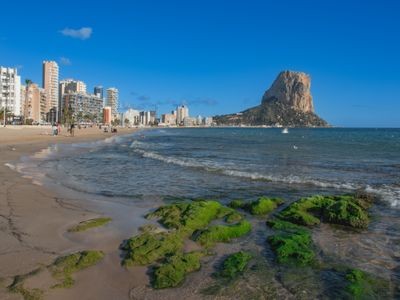
Calpe City Guide
Spain
Calpe (Calp) is defined by the Peñón de Ifach — the sheer 332 m limestone rock that rises straight from the sea between two long sandy beaches and forms Spain's smallest natural park. A long-established, heavily international second-home market (nearly half the population is foreign), it pairs the Arenal-Bol and Fossa/Levante beaches with a working fishing port, a marina, and the flamingo-filled Las Salinas lagoon right in town. The population is about 27,600, swelling sharply in summer. For buyers, current platform listings run roughly €374,000–€1,650,000 (apartments from the high-€300,000s, villas to ~€1.1M+), with market €/m² broadly €4,000+; indicative gross rental yield is around 5.2%. Calpe sits on the FGV TRAM Line 9 (Alicante–Benidorm–Dénia) with AP-7 (exits 63–64) and N-332 access; Alicante Airport is about an hour by road. The buyer base is strongly international second-home and holiday demand across both apartments and villas. See the Spain Investor Guide.
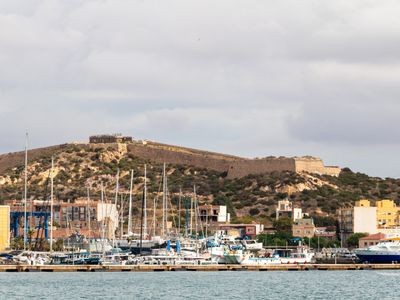
Cartagena City Guide
Spain
Cartagena is a historic Roman and Carthaginian Mediterranean port city — Spain's main Mediterranean naval base — blending ancient remains with early-20th-century Art Nouveau, and fronting the Costa Cálida and Mar Menor coast. Its superbly restored 1st-century-BC Roman Theatre, the still-operational naval arsenal, the unspoilt Calblanque Regional Park and the La Manga del Mar Menor resort strip define a municipality of about 219,000 — the region's second largest. For buyers, the market splits between the urban city and the coast. In the city, apartments run roughly €1,640–€2,789/m² and villas average ~€3,157/m² (sea-view ~€2,815/m²); on the coast, La Manga del Mar Menor apartments average ~€2,556/m², with entry stock from ~€80,000. A Cartagena-specific rental yield isn't separately published. Murcia-Corvera Airport is ~30 km. The buyer base divides between domestic Spanish buyers in the apartment-dominated city and Northern European holiday and second-home buyers along the Mar Menor coast. See the Spain Investor Guide.
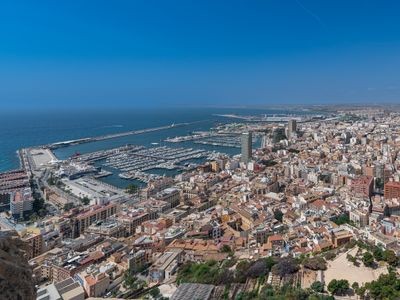
Dénia City Guide
Spain
Dénia is a castle-topped port town on the northern Costa Blanca between Alicante and Valencia, wedged between the Montgó massif and long sandy beaches, with a working marina and daily Baleària ferries to Ibiza and the Balearics. A UNESCO Creative City of Gastronomy, it blends its hilltop castle and old town with the fine-sand Las Marinas strip north of town and the rocky Les Rotes coves to the south. The population is about 47,300, roughly doubling in summer. For buyers, current platform listings run roughly €339,000–€675,000, with an indicative gross rental yield around 5.0%. Dénia is the northern terminus of the FGV TRAM Line 9 (to Benidorm and Altea/Calpe), with AP-7 and N-332 access; Alicante Airport is ~110 km (≈1 h 20 m) and Valencia a similar distance north. The buyer base is a long-established international market — British and German led — across apartments and villas, from the Las Marinas beachfront to Montgó-slope and Les Rotes villas. See the Spain Investor Guide.
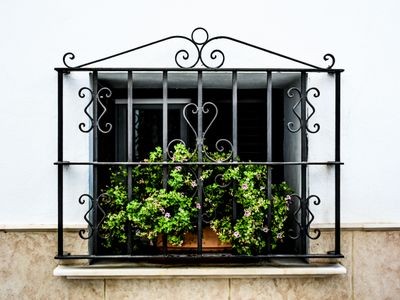
Estepona City Guide
Spain
Estepona — the "Garden of the Costa del Sol" — pairs a flower-filled, mural-decorated old town with the coast's hottest luxury new-build and branded-residence market, just west of Marbella. Its Ruta de Murales street-art trail (70+ facade artworks), the Orchidarium, a 447-mooring marina, Selwo Aventura wildlife park and the beachfront Laguna Village on the New Golden Mile anchor a town of about 79,600 people that has grown into one of Andalusia's most dynamic property markets. For buyers, the municipal average is around €3,900/m² (mid-2025, up ~19% year-on-year), with apartments near €4,236/m² and villas ~€3,625/m²; prime new-builds benchmark €7,000–€9,000/m². Gross rental yields run roughly 4.2–6.1% (short-lets up to ~7.8%). Málaga Airport is ~82 km (≈55 min) via the AP-7. The buyer base is strongly international — British and Scandinavian led, with Dutch and German demand — split between off-plan/branded new-build and resale. See the Spain Investor Guide.
Finestrat City Guide
Spain
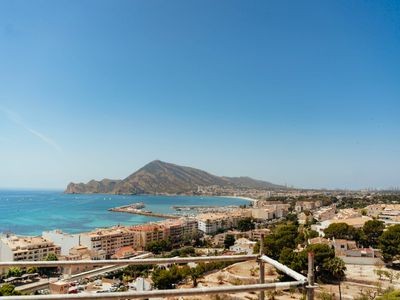
Finestrat is a mountain-backed town beside Benidorm, split between a historic whitewashed hilltop village (Finestrat Pueblo) and a coastal resort strip around Cala de Finestrat and the Sierra Cortina hills — where new sea-view developments rise under the dramatic 1,410 m Puig Campana peak. Its single beach, the ~270 m Cala de Finestrat, adjoins Benidorm's Poniente side, and the Terra Mítica theme park is a few kilometres away. For buyers, idealista indicative ranges are apartments roughly €2,840–€5,900/m² (sea-view newer stock at the top end) and villas €3,380–€5,730/m² (the Balcón de Finestrat urbanisation averaging ~€3,383/m²). A Finestrat-specific rental yield isn't separately published; the Costa Blanca benchmark is ~5–6% gross. The town has ~9,900 residents and sits ~8–12 km from Benidorm and ~50 km (≈1 hr) from Alicante Airport, with AP-7 and N-332 access. The buyer base is Northern European resort and second-home demand — British, Belgian, Dutch and Scandinavian — plus Benidorm-overflow. See the Spain Investor Guide.