City guides
City guides (435)
Fuengirola City Guide
Spain
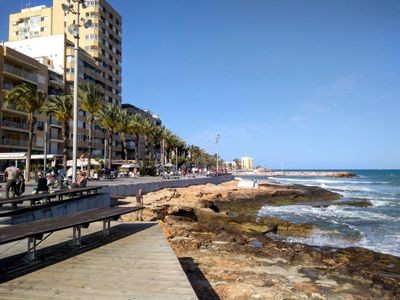
Fuengirola is the most lived-in-all-year of the central Costa del Sol towns — a dense, working coastal city with a ~7 km promenade, Blue Flag beaches and, crucially, the terminus of the Cercanías C1 train that runs straight to Málaga Airport. Landmarks include Bioparc Fuengirola in the town centre, the 10th-century hilltop Sohail Castle and the central Miramar shopping centre, serving a population of about 85,200 and a large year-round international community. For buyers, it is one of the fastest-rising Costa del Sol markets: the August 2025 average was around €4,301–€4,483/m² (up ~18% year-on-year), with apartments ~€4,579/m² and houses ~€3,905/m². Gross rental yields run roughly 4–6% long-term (licensed short-lets higher). Málaga Airport is ~19–23 km, with the C1 train every 30 minutes (~34 min). The buyer base is broad international — notably British and Scandinavian/Finnish — valuing the train, urban amenities and both year-round living and buy-to-let. See the Spain Investor Guide.
Guardamar del Segura City Guide
Spain
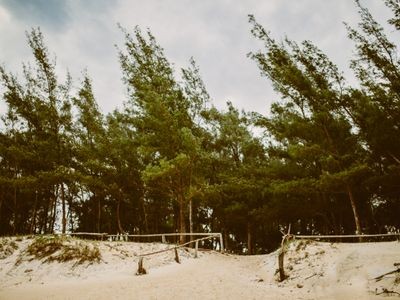
Guardamar del Segura is a pine-and-dune beach town at the mouth of the Río Segura, backed by an 800-hectare planted pine forest (the Alfonso XIII and Reina Sofía parks) that was created to fix the mobile dunes, with around 11 km of Blue Flag coastline. The 14th-century Castillo, the 10th-century Rábita Califal — one of Spain's oldest Islamic sites — and the river-mouth fishing harbour give the town real heritage alongside its beaches. The population is about 18,600. For buyers, it is a value coastal market: current platform listings run roughly €170,000–€750,000, with an indicative gross rental yield around 5.3%; listing €/m² broadly €2,070–€4,600. Alicante-Elche Airport is about 45 minutes by road (AP-7 / N-332 corridor). The buyer base is strongly international — British well represented among residents — plus domestic demand, drawn by the protected dune-backed beaches and relative value. See the Spain Investor Guide.
Jávea City Guide
Spain
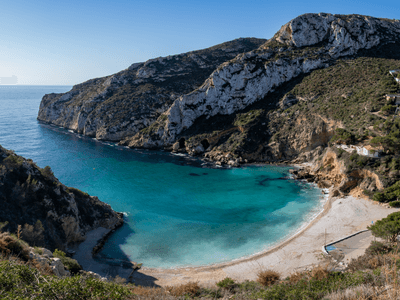
Jávea (Xàbia) is a premium three-town resort on the Costa Blanca's north-eastern tip — a walkable inland Old Town, a working Port/marina, and the sandy Arenal beach district — all hemmed by the Montgó massif. Around half its residents are foreign, with the British community (~6,000) the largest in the entire Valencian Community. Beyond the Arenal, its coast is a string of coves, including the pine-backed Cala Granadella, repeatedly rated among Spain's best, below the Cabo de la Nao headland. For buyers, Jávea is a premium villa market: idealista put the town average at about €4,183/m² (Aug 2026, +5.8% year-on-year), ranging from Portichol–Balcón al Mar (~€5,429/m²) to Partida Tosal (~€3,285/m²). Current platform listings run roughly €375,000 to €4,500,000, with an indicative gross rental yield around 4.6%. There is no train (the TRAM reaches neighbouring Dénia), with AP-7/N-332 access and Alicante Airport ~1 h 30 m away. See the Spain Investor Guide.
Los Alcázares City Guide
Spain
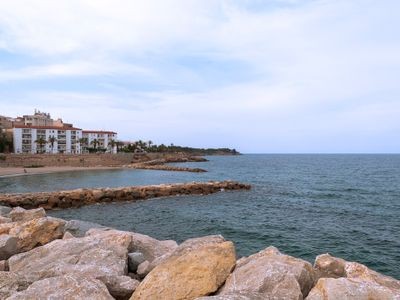
Los Alcázares is a laid-back Mar Menor beachfront town with about 7 km of calm, shallow, warm-lagoon shoreline, a long seafront promenade, golf resorts and a century of aviation heritage — a value-priced Northern-European beach-and-golf base on the Costa Cálida. Its Los Narejos beach, the La Serena Golf course (built around the historic Torre del Rame watchtower) and a municipal aeronautical museum by one of Spain's earliest air bases anchor the town. For buyers, the average is around €2,180/m² (with a beachfront premium to ~€2,809/m² and top zones to ~€3,200/m²); beachfront apartments start from ~€139,000 and entry-level town flats from ~€85,000. Gross rental yields are around 5.7% (median property ~€189,450), with rents now the priciest in the comarca. The town has about 19,400 residents. Murcia-Corvera Airport is ~35 km (30–35 min). The buyer base is predominantly Northern European second-home and retirement buyers drawn to the Mar Menor, golf and low prices. See the Spain Investor Guide.
Madrid City Guide
Spain
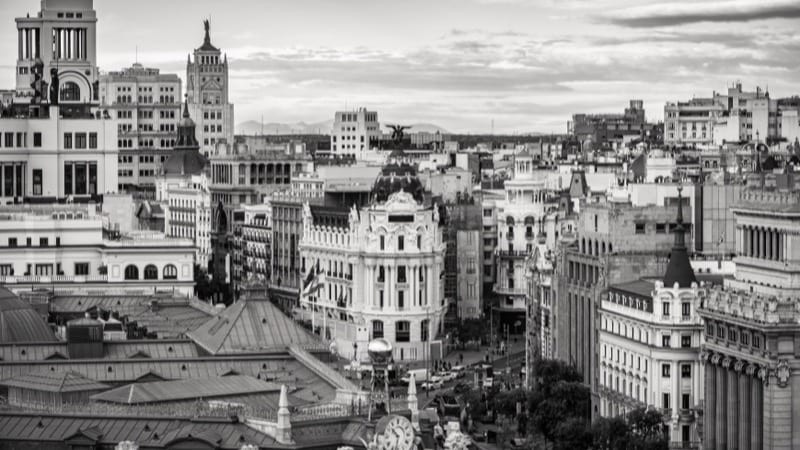
Spain's grand capital pairs imperial-era architecture with one of Europe's most dynamic 21st-century economies. From the marble-clad mansions and luxury boulevards of Salamanca, through the classical residential blocks of Chamberí, to the gleaming towers of the Cuatro Torres business district in Chamartín, Madrid offers investors an unusual combination of capital-city prestige, deep liquidity, and yield potential that compares favorably with Paris, London, and Amsterdam. As the EU's fourth-largest regional economy and home to 72% of Spain's banking activity, Madrid draws constant inflows of corporate talent, multinational headquarters, and international capital. The city's residential market entered 2026 on the back of double-digit price growth in 2024 and 2025, supported by a structural supply shortfall and accelerating in-migration. While the Golden Visa programme was terminated in April 2025, Spain's mainstream investor pathways — combined with Madrid's lifestyle, transport infrastructure, and cultural depth — continue to make the capital the most strategically important city in the Iberian peninsula for international buyers.
Marbella City Guide
Spain
Marbella is the luxury capital of the Costa del Sol (Málaga province, Andalusia), where the Sierra Blanca mountains, crowned by La Concha, meet 27 km of Mediterranean coast. Its glamour is anchored by the Golden Mile, a prestige beachfront-to-hillside corridor running west toward Puerto Banús, the superyacht marina synonymous with designer boutiques, beach clubs and nightlife. The municipality blends a whitewashed Old Town around Plaza de los Naranjos with Nueva Andalucía's 'Golf Valley' and gated villa enclaves like Sierra Blanca and Cascada de Camoján, drawing British, Scandinavian, Dutch, German, Middle Eastern and Russian HNW buyers (~36% of residents are foreign nationals). Foreigners can buy property freely with no nationality restriction, but Spain ABOLISHED its Golden Visa (residency-by-property-investment), which closed to new applicants on 3 April 2025, a purchase no longer grants residency. Short-term tourist-rental (licencia turística) rules are tightening across Spain, and a January 2025 government proposal of an up-to-100% surcharge on second-hand homes bought by non-EU non-residents remains a contested proposal, not law.
Mijas City Guide
Spain
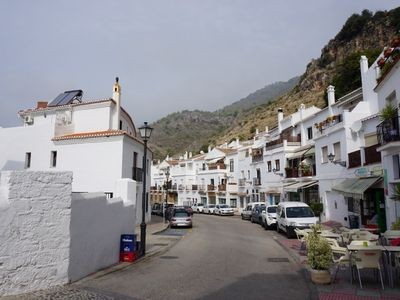
Mijas is two towns in one — the photogenic whitewashed hill village of Mijas Pueblo (famous for its burro-taxis) above the coast, and the 12 km beach-resort strip of Mijas Costa (La Cala de Mijas) below. Green, family-oriented and golf-heavy, it is Málaga province's third most populous municipality (~92,200), spanning sub-areas from La Cala and Riviera del Sol to Campo de Mijas and the year-round hub of Las Lagunas. For buyers, the municipal average is around €3,865/m², with clear internal spread — La Cala de Mijas ~€4,050/m², Mijas Pueblo ~€3,351/m² and Mijas Golf ~€2,844/m². Gross rental yields are among the stronger Costa del Sol zones (long-term ~4–5.5%, holiday lets higher). Málaga Airport is ~35 km from Mijas Costa (note the pueblo is not on the Cercanías rail line — the nearest stations are in Fuengirola). The buyer base is international — British, Scandinavian, Dutch, Belgian and German — mixing family, golf and holiday-home demand with year-round residents. See the Spain Investor Guide.
Málaga City Guide
Spain
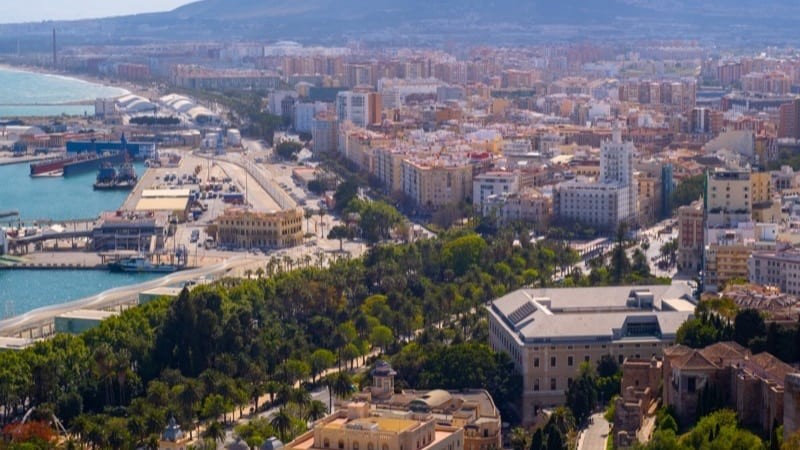
Málaga is the sun-drenched capital of the Costa del Sol and Andalusia's second city (~592,000 residents; ~1.3M metro), a Mediterranean port that has transformed from a beach gateway into one of southern Europe's most dynamic urban centres. Birthplace of Picasso, it is a museum powerhouse, the Museo Picasso, Centre Pompidou (El Cubo on Muelle Uno), Carmen Thyssen and CAC, alongside the Moorish Alcazaba, the Roman Theatre, the Gibralfaro castle and the Cathedral ('La Manquita'). A modernised cruise port, the Muelle Uno promenade and city beaches (La Malagueta, Pedregalejo) sit beside the fast-growing 'Málaga Valley' tech economy (Google, Vodafone, 600+ firms at Málaga TechPark). Foreigners can buy property freely with no nationality restriction, but Spain ABOLISHED its Golden Visa (residency-by-property-investment), which closed to new applicants on 3 April 2025, a purchase no longer grants residency. Short-term tourist-rental (licencia turística) rules are tightening across Spain, and a January 2025 government proposal of an up-to-100% surcharge on second-hand homes bought by non-EU non-residents remains a contested proposal, not law.
Orihuela City Guide
Spain
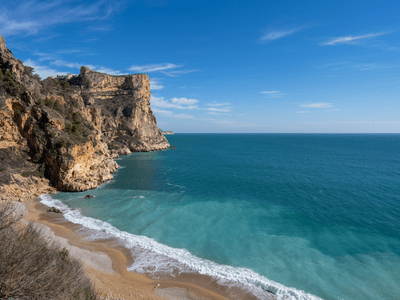
Orihuela spans two very different markets: the historic inland city of Orihuela (far cheaper, ~€1,072/m²) and, on the coast, Orihuela Costa — a string of golf-and-beach urbanisations including La Zenia, Playa Flamenca, Cabo Roig, Villamartín, Campoamor and Punta Prima. The coast is heavily international, with Blue Flag coves, four golf courses within minutes of each other (Villamartín, Campoamor, Las Ramblas) and the big La Zenia Boulevard open-air outlet mall. Orihuela Costa alone had ~30,000 residents in 2025 and is the fastest-growing part of the municipality. For buyers, the coast averages around €3,286/m² (2026, ~+2.5% YoY), with golf enclaves such as Lomas de Campoamor–Las Ramblas higher (~€3,799/m²); indicative ranges are apartments €150,000–€250,000, townhouses €200,000–€350,000 and villas €300,000–€600,000. Gross rental yields are cited ~5–7% long-term (holiday lets higher). Alicante Airport is ~70 km and Murcia-Corvera ~55 km. The buyer base is British-led, then Belgian, Dutch, Scandinavian and German. See the Spain Investor Guide.
Pilar de la Horadada City Guide
Spain
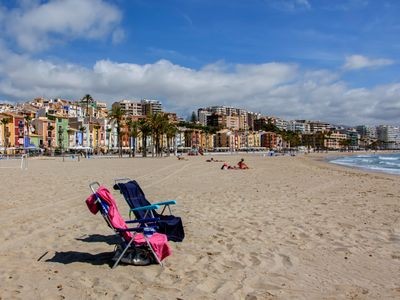
Pilar de la Horadada is the southernmost town of the Costa Blanca, sitting roughly a kilometre from the Murcia border — a Mediterranean beach-and-golf base with a strong Dutch, Belgian, British and Scandinavian community and entry-level coastal prices. Its coastal districts of Torre de la Horadada and Mil Palmeras offer Blue Flag beaches (Playa de Mil Palmeras, Playa de las Higuericas), a 1591 anti-pirate watchtower, a marina and the nearby Lo Romero Golf course. For buyers, idealista puts the town average around €3,227/m² (agency stock sits lower for standard coastal apartments), with indicative ranges of 1-bed apartments €85,000–€120,000, 2-beds €110,000–€165,000, townhouses €170,000–€280,000 and villas €250,000–€500,000+. Gross rental yields are cited ~5–7% for well-placed two-bed apartments, with summer holiday rents of €700–€1,200/week. The town has ~24,300 registered residents (quadrupling in summer). Alicante Airport is ~66 km (50–58 min) and Murcia-Corvera ~40 km (30–40 min). See the Spain Investor Guide.
Pulpí City Guide
Spain
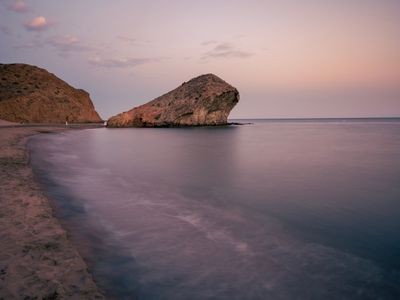
Pulpí is Almería's quiet northern corner on the Andalusia–Murcia border — home to the coastal village of San Juan de los Terreros, with its family beaches, 16th-century headland castle and protected volcanic islets, and to the Geoda de Pulpí, the largest geode discovered in the world, now open to visitors inside the Mina Rica mine. The municipality has about 12,200 residents. For buyers, it is an affordable Costa de Almería market: current platform listings run roughly €179,000–€585,000, with an indicative gross rental yield around 5.0%; listing €/m² broadly €1,490–€4,000, and the Mar de Pulpí resort offers sea-view apartments from around €230,000. Pulpí is unusually well-connected for its size — on the Cercanías Murcia/Alicante C-2 line (stations at Pulpí and Jaravía) and the AP-7/A-7 corridor, within reach of Almería, Murcia-Corvera and Alicante airports. The buyer base is family-oriented international and domestic holiday demand. See the Spain Investor Guide.
Rojales City Guide
Spain
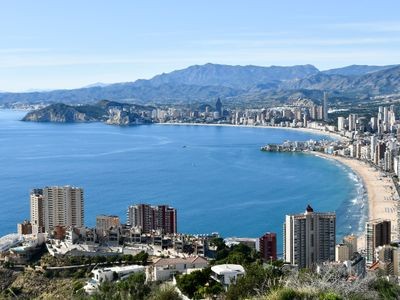
Rojales is an inland Vega Baja town on the river Segura whose large Ciudad Quesada resort is a long-established Northern-European golf-and-villa enclave. Ciudad Quesada (with sub-areas Doña Pepa, Lo Marabú and Quesada Golf) wraps around the 18-hole La Marquesa Golf course, while the old town is known for the Cuevas del Rodeo rock-cut cave dwellings and the Segura's hydraulic heritage. The Torrevieja and La Mata salt lagoons are a short drive away. For buyers, listings start from around €55,000, with detached villas from ~€99,900 up to €427,000–€799,000 and La Marquesa frontline-golf stock €450,000–€1,200,000; the area average is cited ~€2,800/m² for houses. Gross rental yields run ~5–7% on well-positioned Ciudad Quesada properties, with peak-season villa rents of €600–€1,200/week. Of ~17,650 registered residents (over 22,000 de facto), more than 60% are foreign-origin. Alicante Airport is ~40 km (≈35 min), with Murcia-Corvera also close. See the Spain Investor Guide.

San Pedro del Pinatar City Guide
Spain
San Pedro del Pinatar sits at the northern tip of the Mar Menor on the Costa Cálida — a laid-back salt-flats town with about 14 km of coast between the open Mediterranean and the lagoon, famed for its therapeutic mud baths and flamingo-filled regional park. The Parque Regional Salinas y Arenales (a Ramsar wetland with 100+ bird species), the free natural mud baths (lodos) at Lo Pagán, Villananitos beach and the Marina de las Salinas anchor the town. For buyers, the August 2025 average was around €2,111/m², ranging from Lo Pagán (~€1,756/m², the cheapest) to the centre (~€2,437/m²); entry-level property starts from ~€107,500. Gross rental yields are strong — a median around 6.5%, with studios near 10% (above Spain's ~5.5% average). The town has about 29,700 residents. Murcia-Corvera Airport is ~37 km (≈31 min). The buyer base is Northern European beach, nature and retirement buyers, with a distinctive wellness/health-tourism pull from the mud baths. See the Spain Investor Guide.
Santa Pola City Guide
Spain
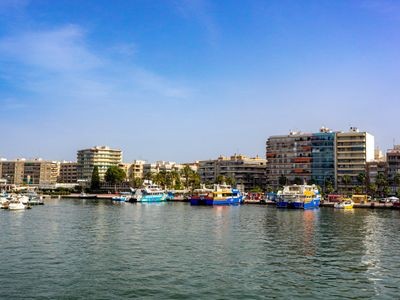
Santa Pola is a working fishing and salt-production port and family beach town facing the marine reserve of Tabarca island — less built-up than neighbouring Torrevieja — with the modern Gran Alacant resort 5 km north near the airport. Its 1858 clifftop lighthouse (Cabo de Santa Pola), the 2,470-hectare Salinas natural park with its flamingos, an active fishing port and 550-berth marina, and shallow family beaches such as Playa Lisa define the town. The population is about 38,500. For buyers, current platform listings run roughly €238,000–€805,000, with an indicative gross rental yield around 5.0%; listing €/m² broadly €2,050–€3,200. Santa Pola is the closest of these towns to Alicante-Elche Airport (~14 km / ~14 min), with AP-7 and the CV-92 coastal road; there is no rail station (a TRAM extension via the airport is planned). The buyer base mixes domestic Spanish demand (Basque Country, Madrid) with French and British buyers. See the Spain Investor Guide.
Seville City Guide
Spain
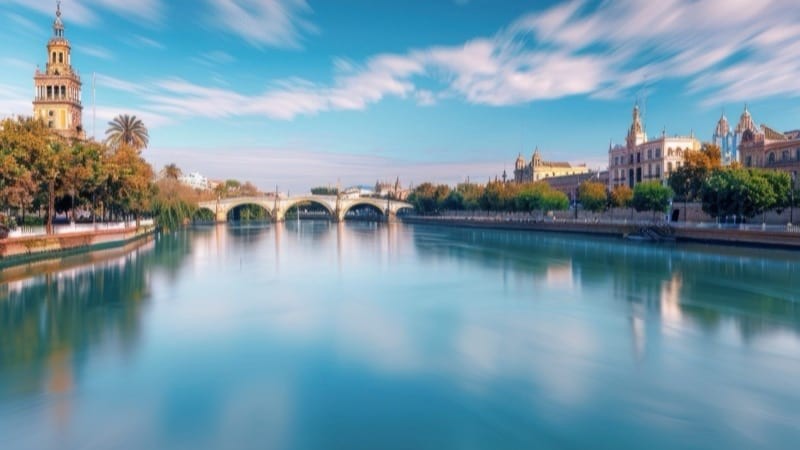
Seville, the sun-drenched capital of Andalusia, offers international buyers a rare blend of world-class heritage, a thriving tourism economy and property prices that remain well below Madrid and Barcelona. The city of roughly 688,000 (with more than 1.5 million in the wider metropolitan area) is built around landmarks such as the cathedral and Giralda, the Real Alcazar and the Plaza de Espana, all of which underpin one of Europe's most resilient tourism flows. Average residential prices sit near 2,000-2,250 euros per square metre citywide, with prime central districts (Nervion, Triana and Los Remedios) pushing toward 2,900 euros/m2 for high-spec units. Rental yields are attractive at roughly 5-6% gross, and occupancy in prime areas exceeds 95%, supported by students, hospital staff and a growing remote-worker population. Forecasts point to steady 3-5% price growth over the next year, with most new construction concentrated in Sevilla Este and Bellavista. As a Eurozone city Seville offers currency and legal stability, though Spain abolished its Golden Visa in 2025, so non-EU buyers no longer gain residency through purchase. Other headwinds include tightening short-term-rental regulation in tourist-heavy zones and affordability pressure on local buyers, both of which make district and licence due diligence essential.
Torre-Pacheco City Guide
Spain
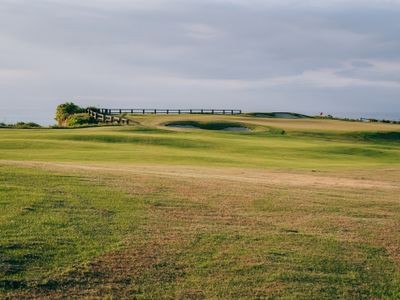
Torre-Pacheco is an inland Campo de Cartagena town bordering the Mar Menor that has become a hub of golf-resort and new-build holiday-home developments on the Costa Cálida. It is anchored by the Polaris World resorts — the 18-hole Mar Menor Golf Resort (Dave Thomas / Nicklaus Design) and La Torre Golf Resort — and the newer Santa Rosalía Lake & Life Resort, built around a 16,000 m² Crystal Lagoons® lagoon. For buyers, it is one of the region's most affordable golf markets: apartments start from around €41,000 (average ~€1,389/m²), while villas run from ~€572,500 (€1,666–€4,192/m²). A town-wide rental yield isn't separately published, though resort rents reach ~€14/m²/month in Mar Menor Golf Resort. The town has about 41,500 residents (a third foreign-born). Murcia-Corvera Airport is ~23 km (≈21 min) and Alicante-Elche ~82 km. The buyer base is Northern European golf-and-beach buyers of new-build resort stock. See the Spain Investor Guide.
Torrevieja City Guide
Spain
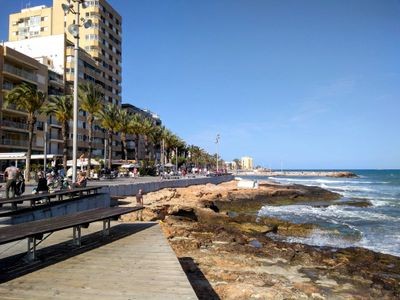
Torrevieja is a big, lively, year-round Costa Blanca resort city of around 110,000 — one of Spain's most international communities (over half the population is foreign, from 120+ countries) — built around two pink salt lagoons, a long seafront promenade and a marina. The Parque Natural de las Lagunas de La Mata y Torrevieja, the Marina Internacional, Playa del Cura, the Aquopolis water park and the Habaneras shopping centre anchor a town famous for affordability and sunshine. For buyers, it offers some of the most accessible beachside prices on the coast — around €2,536/m² (mid-2026, ~+7.9% YoY), with districts ranging from Centro (~€2,177/m²) to Punta Prima (~€3,186/m²). Gross rental yields are strong at roughly 4.6–8.4% (studios ~8%). Alicante-Elche Airport is ~50 km (40–50 min) and Murcia-Corvera ~59 km. The buyer base is broadly Northern European and Eastern European — British, Scandinavian, German and Belgian buyers, atop large resident Ukrainian, Russian and Colombian communities. See the Spain Investor Guide.
Valencia City Guide
Spain
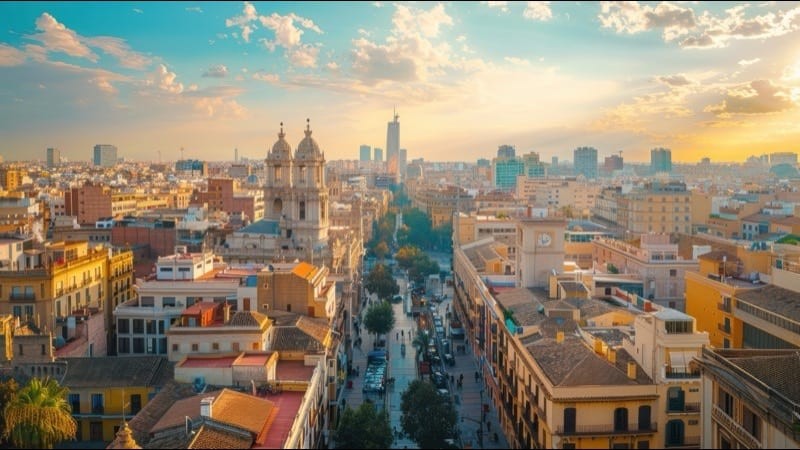
Valencia, Spain's third-largest city (~841,000 residents) and the birthplace of paella, sits on the Mediterranean where the diverted Turia River became the 9 km Turia Gardens, Europe's largest urban park, culminating in Santiago Calatrava's futuristic City of Arts and Sciences. It pairs a medieval old town (Ciutat Vella) anchored by the Cathedral, El Miguelete, the UNESCO-listed La Lonja and the Mercado Central with a working port, the Malvarrosa/Las Arenas beaches and a fast-growing tech, startup and international-expat scene that made it one of Spain's hottest markets (citywide prices up ~15–22% YoY through 2025). Foreigners can buy property freely with no nationality restriction, but Spain ABOLISHED its Golden Visa (residency-by-property-investment), which closed to new applicants on 3 April 2025, a purchase no longer grants residency. Short-term tourist-rental (licencia turística) rules are tightening across Spain, and a January 2025 government proposal of an up-to-100% surcharge on second-hand homes bought by non-EU non-residents remains a contested proposal, not law.
Villajoyosa City Guide
Spain
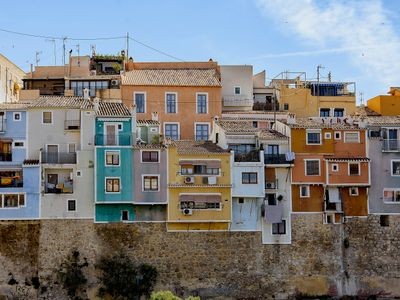
Villajoyosa (La Vila Joiosa) is a historic fishing-and-chocolate town famous for the rainbow-coloured houses lining its seafront — painted, by tradition, so returning fishermen could spot their homes from the sea. Home to the Valor chocolate factory and museum, a Gothic Church of the Assumption, the Royal Palm casino and more than 3 km of beaches, it keeps a more authentic, working-town character than nearby Benidorm, with a population of about 37,400. For buyers, it is one of the better-value Marina Baixa markets: current platform listings run roughly €254,000–€529,000, with an indicative gross rental yield around 5.3%. Villajoyosa sits on the FGV TRAM Line 1 (Alicante–Benidorm–Dénia), ~32 km from Alicante, with N-332 and AP-7 access. The buyer base mixes international (British, Scandinavian, Dutch, Belgian) and strong domestic demand, attracted by the colour, the beaches and the authenticity. See the Spain Investor Guide.

Colombo
Sri Lanka
Colombo is Sri Lanka's commercial capital, financial hub, and the primary gateway for international property investment in the country. With a metropolitan population of approximately 5.6 million, it is the island's largest urban centre and economic engine. The city is undergoing a dramatic transformation, anchored by the USD 14 billion Port City Colombo development — a reclaimed island and special economic zone designed to position Colombo as a regional financial centre rivalling Singapore and Dubai. The property market is in a strong recovery phase following Sri Lanka's 2022 economic crisis. Residential land prices in Colombo District rose 14.4% in the first half of 2025, with suburban areas seeing increases of up to 20%. Luxury CBD condominiums have recorded 48% price appreciation over five years (2018-2023) for pre-2015 builds, while foreign interest in Sri Lankan property has surged 33% year-on-year. Over 8,000 new residential apartment units are expected by 2026, bringing the total recognised units to more than 42,000. Colombo's appeal lies in its combination of low entry prices relative to regional peers (Bangkok, Kuala Lumpur, Singapore), 100% foreign condominium ownership with no unit quotas, and the new Golden Paradise Residence Visa programme offering 5-10 year residency from USD 75,000. The city's tourism sector is thriving — Sri Lanka recorded a historic 2.36 million visitor arrivals in 2025, a 15.1% increase — further supporting rental demand across the city.